
The history of public health is filled with transformative movements that reshaped how societies address environmental hazards. From cholera outbreaks in 19th-century London to lead paint campaigns in modern America, each era has confronted invisible threats that disproportionately affected vulnerable populations. Today, mold contamination represents a similar challenge—one that connects housing quality, environmental justice, and community health in ways that echo past public health struggles.
Understanding how historical movements tackled widespread health threats provides valuable context for addressing modern indoor air quality issues. The parallels between sanitation reform, disease prevention campaigns, and contemporary mold remediation efforts reveal consistent patterns: initial denial, growing awareness, scientific validation, and ultimately, systemic change driven by both grassroots advocacy and professional intervention.
The Sanitation Movement and Environmental Awareness
The mid-1800s sanitation movement fundamentally changed how societies understood the connection between living conditions and disease. Before germ theory became widely accepted, reformers like Edwin Chadwick in England documented how poor drainage, contaminated water, and overcrowded housing correlated with higher mortality rates. Their work established a crucial principle: environmental conditions in homes directly impact health outcomes.
This movement succeeded because it combined empirical observation with public advocacy. Reformers mapped disease patterns, published reports accessible to non-scientists, and pressured governments to invest in infrastructure improvements. The result was comprehensive sewer systems, clean water access, and new building codes that prioritized ventilation and sanitation.
Professional Mold Removal Services in Shreveport, Louisiana and Modern Public Health
Modern mold remediation follows this same trajectory of professionalization that characterized earlier public health movements. Just as sanitation engineers systematically addressed waterborne diseases in the 19th century, today’s environmental health specialists apply scientific protocols to fungal contamination. Services like Shreveport Mold Removal represent the professionalization of environmental health protection, addressing fungal contamination with the same systematic approach that sanitation engineers once applied to waterborne diseases. Both recognize that preventing exposure requires not just treating symptoms but addressing root causes in building design and maintenance.
The Housing Reform Movement and Indoor Environment Standards
By the early 20th century, progressive reformers turned their attention specifically to housing conditions. Jacob Riis’s photographic exposés of New York tenements shocked the public and catalyzed demands for minimum housing standards. Activists documented how dark, damp, poorly ventilated apartments bred tuberculosis and other respiratory diseases.
The housing reform movement established several precedents relevant to mold remediation today:
- Recognition that landlords bear responsibility for maintaining healthy living environments
- Development of minimum standards for ventilation, light, and moisture control
- Understanding that housing quality disproportionately affects low-income communities
- Creation of inspection systems to enforce health and safety codes
These reforms acknowledged what modern research confirms: the indoor environment profoundly influences respiratory health, particularly for children, elderly residents, and those with compromised immune systems. Mold growth in buildings represents a failure of the same environmental controls—moisture management, ventilation, and structural integrity—that housing reformers prioritized over a century ago.
The Lead Paint Campaign and Toxin Awareness
The movement to eliminate lead paint from homes offers perhaps the most direct parallel to mold remediation efforts. For decades, lead-based paint was standard in residential construction despite mounting evidence of neurological harm, particularly to children. The campaign to address this hazard required:
Scientific Documentation: Researchers established clear links between lead exposure and developmental problems, providing the evidence base for regulatory action.
Public Education: Advocates worked to inform parents, landlords, and policymakers about risks that weren’t immediately visible or dramatic.
Professional Remediation Standards: The industry developed certification programs and protocols for safely removing or encapsulating lead paint rather than simply painting over it.
Legal Frameworks: Disclosure requirements and liability standards created incentives for property owners to address contamination proactively.
Mold remediation has followed a similar path. Research has documented the health effects of mycotoxin exposure and chronic dampness. Professional standards have emerged for assessment, containment, and remediation. Legal frameworks increasingly recognize mold contamination as a habitability issue that landlords must address.
Environmental Justice and Disparate Impact
A common thread through all these movements is the recognition that environmental hazards disproportionately affect marginalized communities. Whether examining cholera in working-class neighborhoods, tuberculosis in immigrant tenements, or lead poisoning in low-income housing, the pattern remains consistent: those with the least resources face the greatest exposure to environmental health threats.
Mold contamination follows this same pattern. Studies consistently show higher rates of water damage, inadequate maintenance, and fungal growth in rental properties, subsidized housing, and communities with older housing stock. Residents in these situations often lack the resources to relocate or the legal leverage to compel repairs, creating chronic exposure scenarios.
The environmental justice framework that emerged from these observations emphasizes several principles:
- Equal protection from environmental hazards regardless of income or housing tenure
- Community participation in identifying and addressing local health threats
- Recognition that cumulative exposures compound individual risk factors
- Proactive prevention rather than reactive response to crises
Applying these principles to mold remediation means ensuring that all residents have access to prompt, professional intervention when water damage or fungal growth occurs, regardless of their ability to pay or their relationship with property owners.
The Role of Professional Standards and Certification
Each successful public health movement eventually established professional standards and training programs. Sanitary engineering became a recognized discipline. Housing inspection developed standardized protocols. Lead paint remediation required certification and adherence to EPA guidelines.
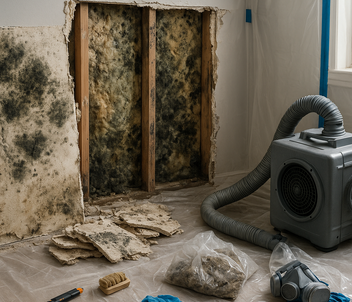
Professional mold remediation has similarly matured into a specialized field with established protocols. Proper remediation involves:
Assessment and Testing
Professionals identify the extent of contamination, moisture sources, and affected materials. This diagnostic phase prevents incomplete remediation that allows problems to recur.
Containment and Protection
Remediation areas are isolated using physical barriers and negative air pressure to prevent spore dispersal to unaffected areas. Workers use appropriate personal protective equipment.
Material Removal and Cleaning
Porous materials with extensive growth are typically removed and discarded. Non-porous surfaces are cleaned using HEPA vacuuming and antimicrobial treatments.
Moisture Control and Prevention
The underlying moisture problem must be corrected—whether that involves repairing leaks, improving drainage, enhancing ventilation, or addressing humidity issues. Without this step, mold will inevitably return.
Verification and Clearance
Post-remediation testing confirms that spore levels have returned to normal background levels and that the space is safe for reoccupation.
These standardized approaches reflect lessons learned from earlier public health movements: professional intervention following established protocols produces better outcomes than ad hoc responses.
Public Education and Awareness Campaigns
Historical public health movements succeeded partly through sustained education efforts that changed public perception and behavior. Germ theory required teaching people that invisible microorganisms caused disease. Lead paint campaigns needed to convince parents that peeling paint posed serious risks even when children showed no immediate symptoms.
Mold awareness faces similar challenges. Because fungal growth often occurs in hidden spaces—behind walls, under flooring, in HVAC systems—many people underestimate its prevalence. Because health effects develop gradually rather than dramatically, the connection between exposure and symptoms isn’t always obvious.
Effective education emphasizes:
- Recognition of warning signs like musty odors, visible growth, water stains, or persistent respiratory symptoms
- Understanding that mold problems indicate moisture issues requiring correction
- Awareness that DIY cleaning of small areas differs from professional remediation of extensive contamination
- Knowledge of tenant rights and landlord responsibilities regarding habitability
Policy Frameworks and Systemic Change
Lasting progress in public health requires not just individual interventions but systemic changes in policy, regulation, and enforcement. The sanitation movement led to municipal water and sewer systems. Housing reform produced building codes and inspection regimes. Lead paint campaigns resulted in federal disclosure requirements and remediation standards.
Mold policy remains less developed but is evolving. Some jurisdictions have established specific mold standards in habitability codes. Disclosure requirements increasingly apply to known mold problems in property transactions. Insurance policies have adapted to address mold-related claims. Professional licensing and certification programs ensure quality standards.
Organizations like the Centers for Disease Control and Prevention provide resources and guidelines that help establish evidence-based standards for indoor environmental quality, including protocols for addressing mold and moisture issues in residential settings.
Future progress will likely involve clearer legal standards for acceptable mold levels, stronger enforcement of moisture control requirements in building codes, and greater resources for remediation in subsidized housing where problems are most prevalent.
Lessons for Contemporary Practice
The historical arc of public health movements offers several lessons for addressing mold contamination today. Success requires combining scientific evidence with public advocacy, professional standards with accessible education, and individual intervention with systemic policy change. It demands recognition that environmental health hazards reflect broader social inequities and that comprehensive solutions must address both immediate remediation needs and underlying structural causes.
Most importantly, history teaches that progress is possible. Societies have successfully confronted invisible environmental threats before, transforming them from accepted background conditions into recognized hazards deserving systematic response. Mold remediation stands at a similar inflection point, benefiting from the frameworks and strategies developed through generations of public health advocacy while adapting them to contemporary understanding of indoor environmental quality.
