Economic Research on Tree Service Markets: Business Models Through History

The tree service industry represents one of the most fascinating case studies in economic evolution, blending traditional craftsmanship with modern business practices. Having worked in this field for decades, I’ve witnessed firsthand how economic forces have shaped the way tree care companies operate, from the early days of individual arborists to today’s sophisticated service providers. Understanding this evolution provides valuable insights into how local markets develop and sustain themselves over time.

The Origins of Commercial Tree Care

Tree care as a commercial enterprise emerged during the late 19th century when urbanization created unprecedented demand for professional arborists. Before this period, property owners handled tree maintenance themselves or relied on general laborers with minimal specialized knowledge. The transformation began when cities recognized that street trees required expert care to thrive in urban environments.

Early tree service businesses operated on what economists call a “craft guild” model. Individual practitioners built reputations through apprenticeships and word-of-mouth referrals. These pioneers charged premium rates because their specialized knowledge was scarce and valuable. The economic barrier to entry was relatively low—a skilled climber needed only basic equipment like ropes, saws, and ladders to start a business.

The business model during this era was straightforward: charge by the job, work alone or with a small crew, and build a client base through personal relationships. This approach worked well in smaller communities where reputation served as the primary marketing tool and quality control mechanism.

The Mid-Century Transformation

The period from 1940 to 1980 brought significant changes to tree service economics. Several factors converged to reshape the industry fundamentally:

Technological Innovation

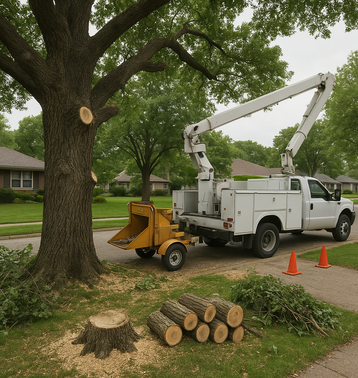
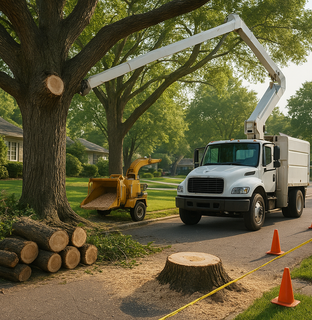
The introduction of chainsaws, bucket trucks, and wood chippers revolutionized productivity. Companies that invested in this equipment could complete jobs faster and safer, but the capital requirements created new economic dynamics. Suddenly, starting a competitive tree service required substantial upfront investment, raising barriers to entry and favoring established businesses.

Insurance and Liability

As legal frameworks evolved, liability insurance became essential. This shift transformed the economic landscape because insurance costs created fixed overhead that small operators struggled to absorb. Companies needed consistent revenue streams to justify these expenses, leading to more sophisticated business planning and customer acquisition strategies.

Specialization and Diversification

Some companies chose to specialize in specific services like hazardous tree removal or utility line clearance, while others diversified into related fields such as landscaping or stump grinding. These strategic choices reflected different economic theories about competitive advantage and market positioning.

Modern Business Models in Regional Markets

Today’s tree service industry exhibits remarkable diversity in business models, each responding to specific economic conditions and market demands. In regions like Arkansas, where seasonal weather patterns and diverse tree species create unique challenges, companies have developed particularly innovative approaches.

Professional Tree Service in Jonesboro, Arkansas: A Case Study in Market Adaptation

The evolution of tree care businesses in mid-sized communities throughout Arkansas demonstrates how local market conditions shape service delivery models. Jonesboro and similar cities present unique economic environments where tree service providers must balance residential, commercial, and municipal clients while adapting to regional weather patterns that include ice storms, high winds, and tornado activity. These geographical and demographic factors create demand patterns distinct from larger metropolitan areas or rural regions, requiring businesses to develop flexible operational capabilities.

The most successful operations balance multiple revenue streams while maintaining core competencies. Jonesboro Tree Service exemplifies this evolution, demonstrating how modern tree care businesses integrate traditional expertise with contemporary business practices to serve their communities effectively.

The Volume Model

Some companies pursue a high-volume strategy, focusing on rapid job completion and competitive pricing. This model requires:

  • Significant equipment investment to maximize efficiency
  • Large crews capable of handling multiple jobs simultaneously
  • Aggressive marketing to maintain consistent workflow
  • Streamlined operations to keep per-job costs low

This approach works best in densely populated areas with steady demand. The economic logic relies on economies of scale—spreading fixed costs across many jobs to achieve profitability despite lower margins per project.

The Premium Service Model

Alternatively, some businesses position themselves as premium providers, emphasizing quality, expertise, and customer service over price competition. This model typically features:

  • Certified arborists and highly trained crews
  • Specialized equipment for complex jobs
  • Comprehensive consultations and tree health assessments
  • Higher pricing justified by superior outcomes

Economic research shows that premium positioning succeeds when customers perceive significant value differences between providers. In tree care, this perception often stems from visible expertise, professional credentials, and demonstrated results.

Economic Cycles and Market Resilience

The tree service industry exhibits interesting patterns during economic fluctuations. Unlike purely discretionary services, tree care occupies a middle ground between necessity and luxury, creating unique market dynamics.

Recession Resistance

During economic downturns, emergency services like hazardous tree removal remain in demand—trees don’t stop falling because the economy contracts. However, discretionary services like aesthetic pruning or landscape tree planting decline significantly. Successful companies maintain financial stability by balancing these service categories.

Historical data from various recessions shows that tree service businesses with diversified offerings and strong emergency response capabilities weather economic storms more effectively than those focused solely on elective services.

Storm-Driven Demand Spikes

Severe weather events create sudden demand surges that test business capacity and strategic planning. Companies must decide whether to maintain excess capacity for emergencies or rely on temporary scaling during crises. Each approach involves different economic trade-offs between fixed costs and opportunity costs.

Labor Economics and Workforce Development

Labor represents the largest expense for most tree service companies, and workforce management significantly impacts profitability. The industry faces ongoing challenges in recruiting and retaining skilled workers, creating economic pressures that shape business strategies.
philosophical approaches to arboriculture

The Skilled Labor Premium

Certified arborists and experienced climbers command premium wages because their skills require years to develop. Companies must balance labor costs against the value that expertise brings to service quality and safety. This calculation becomes particularly important when bidding competitively while maintaining profitability.

Training Investment

Forward-thinking businesses invest heavily in training programs, viewing workforce development as a long-term economic strategy. While training costs reduce short-term profits, they create competitive advantages through superior service quality and reduced turnover expenses. Industry organizations like the Tree Care Industry Association provide valuable resources for workforce development and professional certification programs that help companies build skilled teams.

Technology and Future Economic Trends

Emerging technologies are reshaping tree service economics in ways that echo historical transformations. Drone assessments, digital mapping, and sophisticated diagnostic tools require new capital investments but promise efficiency gains and service improvements.

Software and Business Management

Modern tree service companies increasingly rely on specialized software for scheduling, estimating, customer relationship management, and financial tracking. These tools reduce administrative overhead and improve decision-making, but they require ongoing subscription costs and staff training.

Marketing and Customer Acquisition

Digital marketing has transformed customer acquisition economics. Traditional methods like Yellow Pages advertising and door-to-door marketing have given way to search engine optimization, social media presence, and online review management. This shift favors companies that understand digital channels and can invest in online visibility.

Sustainability and Long-Term Value

Contemporary tree service businesses increasingly recognize that long-term economic success depends on sustainable practices. This includes environmental stewardship, fair labor practices, and community engagement. While these commitments may increase short-term costs, they build brand value and customer loyalty that drive sustained profitability. Compliance with U.S. Environmental Protection Agency guidelines and adoption of environmentally responsible practices have become essential components of modern tree service operations.

The economic research clearly shows that tree service markets reward businesses that balance immediate financial performance with long-term strategic thinking. Companies that invest in equipment, training, technology, and reputation consistently outperform those focused solely on minimizing costs.

Lessons from Economic History

Studying the economic evolution of tree service markets reveals several enduring principles. Successful businesses adapt to changing conditions while maintaining core competencies. They invest strategically in capabilities that differentiate them from competitors. They understand their local markets deeply and position themselves to serve genuine community needs.
political landscape tree management

The industry’s history demonstrates that sustainable business models emerge from understanding both economic fundamentals and the specific characteristics of tree care work. Companies that recognize the unique combination of skilled labor, capital equipment, seasonal demand patterns, and safety requirements can build enterprises that serve their communities profitably for generations.

As we look toward the future, tree service economics will continue evolving in response to climate change, urban development patterns, technological innovation, and shifting customer expectations. The businesses that thrive will be those that learn from history while remaining flexible enough to embrace new opportunities and challenges.


Enlightenment and Electricity: Philosophical Lessons from the Electrician’s Trade

The Hidden Philosophy in Every Wire

There’s something profound about working with electricity. It’s invisible yet powerful, essential yet dangerous, simple in principle yet complex in practice. The electrician’s trade offers more than just technical knowledge—it presents a unique lens through which to view life’s deeper questions about connection, flow, and the unseen forces that shape our world.

historical electrician workshop tools

Every day, electricians engage with paradoxes that philosophers have pondered for centuries. They work with energy they cannot see, trusting in principles they’ve learned and tested. They create systems where balance is everything, where too much resistance causes problems, and where proper grounding keeps everything safe. These aren’t just technical realities—they’re metaphors for living wisely.

The Principle of Resistance

In electrical systems, resistance determines how energy flows. Too much resistance and nothing works; too little and you risk overload. The skilled electrician knows that resistance isn’t the enemy—it’s a necessary component that must be properly managed.

Life operates similarly. We need the right amount of resistance to grow stronger, to develop resilience, to build character. Complete ease weakens us, while overwhelming opposition breaks us. The wisdom lies in recognizing what level of resistance serves us and what level harms us.

Finding the Path of Least Resistance

Electricity naturally seeks the path of least resistance, a principle that electricians must respect and anticipate. This tendency isn’t good or bad—it simply is. Understanding this allows for proper safety measures and effective design.

Human nature often follows similar patterns. We gravitate toward comfort and ease, which isn’t inherently wrong. The key is ensuring that our “paths of least resistance” lead somewhere worthwhile rather than somewhere dangerous. Like a well-designed circuit, our lives need intentional structure to channel our natural tendencies productively.

historical figures in electrical engineering

Professional Electrician Services in Greenville, South Carolina

The theoretical principles of electrical work take on practical significance when applied to real homes and businesses. Throughout Greenville, South Carolina, skilled electricians demonstrate these philosophical principles daily—balancing safety with functionality, respecting invisible forces, and creating systems that serve their communities reliably. The craft requires not just technical knowledge but also the wisdom to know when to proceed and when to pause, when to troubleshoot and when to rebuild from scratch. Following standards established by organizations like the National Fire Protection Association ensures that electrical work meets rigorous safety requirements.

The Necessity of Grounding

Perhaps no electrical concept carries more philosophical weight than grounding. An ungrounded system is fundamentally unsafe, prone to dangerous surges and unpredictable behavior. Grounding provides stability, safety, and a reference point for the entire system.

When seeking reliable electrical work, choosing an experienced electrician in Greenville means working with someone who understands that proper grounding isn’t optional—it’s foundational to everything else.

We too need grounding in our lives. Whether through relationships, values, practices, or beliefs, grounding provides stability when surges of emotion or circumstance threaten to overwhelm us. Without it, we’re vulnerable to being swept away by whatever current happens to be strongest in the moment.

Connection and Flow

Electrical systems are fundamentally about connection. Power generation means nothing if energy can’t flow to where it’s needed. Every connection point matters—loose connections cause problems, corroded connections create resistance, and broken connections stop flow entirely.

Maintaining Your Connections

The electrician knows that connections require maintenance. Terminals tighten, wires corrode, and insulation degrades. Regular inspection and upkeep aren’t optional luxuries—they’re essential practices that prevent problems before they become emergencies.

Our personal and professional relationships require similar attention. Connections that once felt strong can weaken through neglect. The wisdom of the electrician’s approach applies here: don’t wait for complete failure before addressing the warning signs.

Respect for Invisible Power

Electricians develop a healthy respect for forces they cannot directly perceive. Electricity doesn’t announce itself visually until it’s already causing problems. This cultivates a particular kind of mindfulness—an awareness that just because you can’t see something doesn’t mean it’s not present and powerful.

This perspective serves us well beyond electrical work. Many of life’s most important realities—love, trust, integrity, purpose—are invisible yet profoundly influential. Learning to work skillfully with what we cannot see, guided by principles we’ve tested and proven, is a form of practical wisdom.

The Enlightenment in the Work

The electrician’s trade teaches patience, precision, and respect for natural laws. It demonstrates that safety and efficiency come from understanding and working with reality as it is, not as we wish it to be. These lessons illuminate more than rooms—they can light our way toward clearer thinking and more grounded living.

Economic Research Into Society’s Main Financial Systems: The Atlas Foundation Investigates

The financial systems that support modern economies influence everything from household budgets and business investment to government policy and international trade. Through ongoing economic analysis and educational initiatives, the Atlas Economic Research Foundation seeks to better understand how these systems operate and how they affect society as a whole.

Understanding Modern Financial Systems

A financial system is the collection of institutions, markets, regulations, and processes that allow money and capital to move throughout an economy. These systems help connect savers with borrowers, investors with businesses, and consumers with goods and services.

At their core, financial systems exist to facilitate economic activity. Whether through banks, stock markets, bond markets, or payment networks, they help allocate resources across society in ways that ideally promote productivity and growth. Capital allocation efficiency remains one of the most important concepts studied by economists examining financial systems.

The Evolution of Economic Structures

Throughout history, societies have experimented with many different economic models. Some have relied heavily on centralized planning, while others have emphasized free-market competition. Most modern nations now operate under some variation of a mixed economy that combines private enterprise with government oversight.

The Atlas Economic Research Foundation frequently studies how these economic structures evolve over time. Political decisions, technological innovation, demographic shifts, and global events all influence the development of financial institutions and markets.

Understanding these changes helps researchers identify both opportunities and challenges facing future generations.

The Role of Banking Institutions

Banks remain among the most important pillars of modern financial systems. They provide lending services, hold deposits, process payments, and support economic activity across virtually every sector.

Commercial banks help businesses expand by providing access to capital, while consumers rely on banking services for mortgages, vehicle loans, and personal finance management. Meanwhile, central banks influence broader economic conditions through monetary policy and interest-rate decisions.

Monetary policy transmission mechanisms are often studied by economists seeking to understand how central bank actions affect inflation, employment, and economic growth.

Financial Markets and Investment Activity

Financial markets provide another essential component of the modern economic landscape. Stock exchanges, bond markets, and investment funds create opportunities for organizations to raise capital while offering investors potential returns.

When functioning effectively, these markets can direct resources toward productive businesses and innovative industries. However, periods of speculation and excessive risk-taking can also create instability.

The Atlas Economic Research Foundation regularly examines the relationship between market efficiency, investor behavior, and long-term economic development. Researchers continue to debate the best methods for balancing innovation with financial stability.

Technology’s Impact on Financial Systems

Technological innovation has transformed financial systems in recent decades. Digital banking platforms, electronic payment systems, mobile financial applications, and financial technology companies have changed how people interact with money.

Consumers now have access to services that would have been unimaginable only a generation ago. Transactions can occur instantly across vast distances, and individuals can manage investments from virtually anywhere in the world.

Digital infrastructure modernization trends represent a growing area of interest for economists studying the future of finance.

Economic Growth and Wealth Distribution

One of the most debated topics in economic research involves the relationship between financial systems and wealth distribution. Some economists argue that robust financial markets promote widespread prosperity by creating opportunities for entrepreneurship and investment.

Others focus on how unequal access to capital can contribute to disparities in wealth and opportunity. As a result, policymakers often seek ways to balance economic growth with social mobility and financial inclusion.

The Atlas Economic Research Foundation believes that objective research is essential for evaluating these competing perspectives and understanding the real-world outcomes of various policy approaches.

Globalization and Financial Interconnectedness

Modern financial systems are increasingly interconnected across national borders. Capital flows between countries at unprecedented speeds, creating both opportunities and risks.

International investment can stimulate growth and development, but financial disruptions in one region can sometimes spread rapidly to others. Economic crises, currency fluctuations, and shifts in investor confidence often demonstrate how closely linked global financial systems have become.

Researchers continue to analyze these relationships in order to better understand the dynamics of the modern global economy.

The Importance of Independent Economic Research

As economic systems become increasingly complex, the need for rigorous and independent analysis continues to grow. The Atlas Economic Research Foundation is committed to examining financial institutions, market structures, and economic policies through careful research and evidence-based inquiry.

Rather than focusing on short-term trends or political narratives, the Atlas Economic Research Foundation seeks to contribute meaningful insights that improve public understanding of economic systems and their long-term effects.

Long-term economic sustainability research remains a key area of interest as economists, policymakers, businesses, and citizens work to navigate an increasingly interconnected financial world.

Through continued investigation into society’s primary financial systems, the Atlas Economic Research Foundation aims to help inform discussions about economic growth, financial stability, innovation, and prosperity for generations to come.

Mold Removal and Social Progress: Lessons from Historical Public Health Movements

The history of public health is filled with transformative movements that reshaped how societies address environmental hazards. From cholera outbreaks in 19th-century London to lead paint campaigns in modern America, each era has confronted invisible threats that disproportionately affected vulnerable populations. Today, mold contamination represents a similar challenge—one that connects housing quality, environmental justice, and community health in ways that echo past public health struggles.

Understanding how historical movements tackled widespread health threats provides valuable context for addressing modern indoor air quality issues. The parallels between sanitation reform, disease prevention campaigns, and contemporary mold remediation efforts reveal consistent patterns: initial denial, growing awareness, scientific validation, and ultimately, systemic change driven by both grassroots advocacy and professional intervention.

The Sanitation Movement and Environmental Awareness

The mid-1800s sanitation movement fundamentally changed how societies understood the connection between living conditions and disease. Before germ theory became widely accepted, reformers like Edwin Chadwick in England documented how poor drainage, contaminated water, and overcrowded housing correlated with higher mortality rates. Their work established a crucial principle: environmental conditions in homes directly impact health outcomes.

This movement succeeded because it combined empirical observation with public advocacy. Reformers mapped disease patterns, published reports accessible to non-scientists, and pressured governments to invest in infrastructure improvements. The result was comprehensive sewer systems, clean water access, and new building codes that prioritized ventilation and sanitation.

Professional Mold Removal Services in Shreveport, Louisiana and Modern Public Health

Modern mold remediation follows this same trajectory of professionalization that characterized earlier public health movements. Just as sanitation engineers systematically addressed waterborne diseases in the 19th century, today’s environmental health specialists apply scientific protocols to fungal contamination. Services like Shreveport Mold Removal represent the professionalization of environmental health protection, addressing fungal contamination with the same systematic approach that sanitation engineers once applied to waterborne diseases. Both recognize that preventing exposure requires not just treating symptoms but addressing root causes in building design and maintenance.

The Housing Reform Movement and Indoor Environment Standards

By the early 20th century, progressive reformers turned their attention specifically to housing conditions. Jacob Riis’s photographic exposés of New York tenements shocked the public and catalyzed demands for minimum housing standards. Activists documented how dark, damp, poorly ventilated apartments bred tuberculosis and other respiratory diseases.

The housing reform movement established several precedents relevant to mold remediation today:

  • Recognition that landlords bear responsibility for maintaining healthy living environments
  • Development of minimum standards for ventilation, light, and moisture control
  • Understanding that housing quality disproportionately affects low-income communities
  • Creation of inspection systems to enforce health and safety codes

These reforms acknowledged what modern research confirms: the indoor environment profoundly influences respiratory health, particularly for children, elderly residents, and those with compromised immune systems. Mold growth in buildings represents a failure of the same environmental controls—moisture management, ventilation, and structural integrity—that housing reformers prioritized over a century ago.

The Lead Paint Campaign and Toxin Awareness

The movement to eliminate lead paint from homes offers perhaps the most direct parallel to mold remediation efforts. For decades, lead-based paint was standard in residential construction despite mounting evidence of neurological harm, particularly to children. The campaign to address this hazard required:

Scientific Documentation: Researchers established clear links between lead exposure and developmental problems, providing the evidence base for regulatory action.

Public Education: Advocates worked to inform parents, landlords, and policymakers about risks that weren’t immediately visible or dramatic.

Professional Remediation Standards: The industry developed certification programs and protocols for safely removing or encapsulating lead paint rather than simply painting over it.

Legal Frameworks: Disclosure requirements and liability standards created incentives for property owners to address contamination proactively.

Mold remediation has followed a similar path. Research has documented the health effects of mycotoxin exposure and chronic dampness. Professional standards have emerged for assessment, containment, and remediation. Legal frameworks increasingly recognize mold contamination as a habitability issue that landlords must address.

Environmental Justice and Disparate Impact

A common thread through all these movements is the recognition that environmental hazards disproportionately affect marginalized communities. Whether examining cholera in working-class neighborhoods, tuberculosis in immigrant tenements, or lead poisoning in low-income housing, the pattern remains consistent: those with the least resources face the greatest exposure to environmental health threats.

Mold contamination follows this same pattern. Studies consistently show higher rates of water damage, inadequate maintenance, and fungal growth in rental properties, subsidized housing, and communities with older housing stock. Residents in these situations often lack the resources to relocate or the legal leverage to compel repairs, creating chronic exposure scenarios.

The environmental justice framework that emerged from these observations emphasizes several principles:

  • Equal protection from environmental hazards regardless of income or housing tenure
  • Community participation in identifying and addressing local health threats
  • Recognition that cumulative exposures compound individual risk factors
  • Proactive prevention rather than reactive response to crises

Applying these principles to mold remediation means ensuring that all residents have access to prompt, professional intervention when water damage or fungal growth occurs, regardless of their ability to pay or their relationship with property owners.

The Role of Professional Standards and Certification

Each successful public health movement eventually established professional standards and training programs. Sanitary engineering became a recognized discipline. Housing inspection developed standardized protocols. Lead paint remediation required certification and adherence to EPA guidelines.

Professional mold remediation has similarly matured into a specialized field with established protocols. Proper remediation involves:

Assessment and Testing

Professionals identify the extent of contamination, moisture sources, and affected materials. This diagnostic phase prevents incomplete remediation that allows problems to recur.

Containment and Protection

Remediation areas are isolated using physical barriers and negative air pressure to prevent spore dispersal to unaffected areas. Workers use appropriate personal protective equipment.

Material Removal and Cleaning

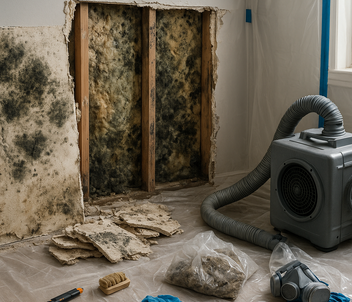
Porous materials with extensive growth are typically removed and discarded. Non-porous surfaces are cleaned using HEPA vacuuming and antimicrobial treatments.

Moisture Control and Prevention

The underlying moisture problem must be corrected—whether that involves repairing leaks, improving drainage, enhancing ventilation, or addressing humidity issues. Without this step, mold will inevitably return.

Verification and Clearance

Post-remediation testing confirms that spore levels have returned to normal background levels and that the space is safe for reoccupation.

These standardized approaches reflect lessons learned from earlier public health movements: professional intervention following established protocols produces better outcomes than ad hoc responses.

economic impact of mold removal

Public Education and Awareness Campaigns

Historical public health movements succeeded partly through sustained education efforts that changed public perception and behavior. Germ theory required teaching people that invisible microorganisms caused disease. Lead paint campaigns needed to convince parents that peeling paint posed serious risks even when children showed no immediate symptoms.

Mold awareness faces similar challenges. Because fungal growth often occurs in hidden spaces—behind walls, under flooring, in HVAC systems—many people underestimate its prevalence. Because health effects develop gradually rather than dramatically, the connection between exposure and symptoms isn’t always obvious.

Effective education emphasizes:

  • Recognition of warning signs like musty odors, visible growth, water stains, or persistent respiratory symptoms
  • Understanding that mold problems indicate moisture issues requiring correction
  • Awareness that DIY cleaning of small areas differs from professional remediation of extensive contamination
  • Knowledge of tenant rights and landlord responsibilities regarding habitability

Policy Frameworks and Systemic Change

Lasting progress in public health requires not just individual interventions but systemic changes in policy, regulation, and enforcement. The sanitation movement led to municipal water and sewer systems. Housing reform produced building codes and inspection regimes. Lead paint campaigns resulted in federal disclosure requirements and remediation standards.

Mold policy remains less developed but is evolving. Some jurisdictions have established specific mold standards in habitability codes. Disclosure requirements increasingly apply to known mold problems in property transactions. Insurance policies have adapted to address mold-related claims. Professional licensing and certification programs ensure quality standards.

Organizations like the Centers for Disease Control and Prevention provide resources and guidelines that help establish evidence-based standards for indoor environmental quality, including protocols for addressing mold and moisture issues in residential settings.

Future progress will likely involve clearer legal standards for acceptable mold levels, stronger enforcement of moisture control requirements in building codes, and greater resources for remediation in subsidized housing where problems are most prevalent.

Lessons for Contemporary Practice

The historical arc of public health movements offers several lessons for addressing mold contamination today. Success requires combining scientific evidence with public advocacy, professional standards with accessible education, and individual intervention with systemic policy change. It demands recognition that environmental health hazards reflect broader social inequities and that comprehensive solutions must address both immediate remediation needs and underlying structural causes.

Most importantly, history teaches that progress is possible. Societies have successfully confronted invisible environmental threats before, transforming them from accepted background conditions into recognized hazards deserving systematic response. Mold remediation stands at a similar inflection point, benefiting from the frameworks and strategies developed through generations of public health advocacy while adapting them to contemporary understanding of indoor environmental quality.

A Historical Review of Global Economic Development and Trade

Global economic development and international trade have shaped the course of human civilization for thousands of years. The exchange of goods, services, knowledge, and resources has helped societies grow, innovate, and improve standards of living. Throughout history, economic systems have evolved alongside advances in technology, transportation, finance, and governance. The Atlas Economic Research Foundation examines these historical developments to better understand how economic activity and trade have influenced the modern world.

The Origins of Trade and Economic Exchange

Long before the emergence of modern financial systems, communities engaged in trade to obtain resources that were unavailable within their own regions. Early farmers, craftsmen, and merchants exchanged food, tools, textiles, and raw materials through local and regional networks.

These early forms of commerce allowed societies to specialize in particular goods and services while benefiting from the production capabilities of neighboring populations. Historians frequently point to economic specialization and resource allocation as key factors behind the growth of early civilizations.

As trade networks expanded, they helped spread ideas, technologies, and cultural practices across vast geographic areas.

Ancient Trade Routes and Commercial Expansion

Ancient trade routes connected distant regions and facilitated the movement of valuable goods across continents. Merchants transported products such as spices, metals, silk, ceramics, and agricultural commodities through increasingly sophisticated commercial networks.

The growth of these routes encouraged economic development by linking producers with consumers and creating opportunities for wealth generation. Many economic historians consider cross-regional commercial connectivity to be one of the defining characteristics of early economic advancement.

The Atlas Economic Research Foundation recognizes that these historic trade networks laid the groundwork for many of the international economic relationships that exist today.

The Rise of Commercial Centers and Market Economies

As trade volumes increased, many cities developed into major commercial centers. Strategic locations near waterways, ports, and transportation routes often allowed communities to become hubs of economic activity.

Merchants, investors, and skilled workers were drawn to these growing markets. Over time, increasingly sophisticated business practices emerged to support larger and more complex transactions. Financial agreements, merchant partnerships, and early forms of banking helped facilitate expanding commerce.

The development of these institutions reflected the growing importance of market-based economic coordination mechanisms within developing economies.

Financial Innovation and Economic Growth

The growth of commerce created demand for more advanced financial systems. Businesses needed ways to finance expansion, manage risk, and facilitate long-distance transactions.

As a result, banking institutions, lending arrangements, insurance mechanisms, and investment partnerships gradually became more common. These innovations helped channel capital toward productive activities while supporting entrepreneurship and infrastructure development.

According to research examined by the Atlas Economic Research Foundation, capital formation and financial intermediation have consistently played important roles in long-term economic growth throughout history.

The Industrial Revolution and Global Transformation

Few events had a greater impact on economic development than the Industrial Revolution. Technological advancements dramatically increased productivity and transformed manufacturing processes across numerous industries.

Factories enabled large-scale production while transportation innovations reduced costs and expanded market access. Railroads, steamships, and later modern transportation systems allowed goods to move more efficiently between regions and nations.

These developments accelerated economic growth while expanding international trade. Economists often view industrial productivity expansion and technological innovation as central drivers of rising living standards during this period.

The Expansion of International Trade

As industrial economies grew, nations increasingly participated in international commerce. Businesses sought access to new customers, resources, and investment opportunities beyond their domestic markets.

Trade encouraged specialization by allowing countries to focus on industries where they possessed competitive advantages. The resulting increase in efficiency often contributed to economic growth and greater availability of goods for consumers.

The Atlas Economic Research Foundation continues to study how comparative advantage and international exchange have influenced economic development across different regions of the world.

The Development of Modern Financial Markets

Modern financial markets emerged to support expanding economic activity. Stock exchanges, bond markets, investment firms, and banking institutions provided mechanisms for raising capital and financing growth.

These markets helped connect investors with businesses seeking funding for expansion and innovation. Efficient capital allocation became increasingly important as economies grew more complex and interconnected.

Researchers frequently examine how financial market efficiency and investment flows contribute to economic performance over time.

Globalization and Economic Integration

The twentieth and twenty-first centuries witnessed unprecedented levels of economic integration. Improvements in transportation, communication, and information technology reduced barriers between markets and accelerated cross-border commerce.

Global supply chains emerged, linking producers, manufacturers, distributors, and consumers across multiple continents. Businesses gained access to larger markets while consumers benefited from increased product availability and competition.

The Atlas Economic Research Foundation views global economic interconnectedness and market integration as among the most significant economic developments of the modern era.

The Role of Technology in Modern Trade

Technological innovation continues to reshape economic systems and trade relationships. Digital communications, electronic payments, cloud computing, and advanced logistics networks have transformed how businesses operate.

Organizations can now coordinate activities across international markets with unprecedented speed and efficiency. Information flows almost instantly, enabling businesses to respond rapidly to changing economic conditions.

Many economists identify digital transformation and technological modernization as major factors influencing contemporary economic growth and productivity.

Economic Challenges Throughout History

While economic development has generated substantial benefits, periods of disruption have also occurred throughout history. Financial crises, market downturns, wars, resource shortages, and policy mistakes have periodically affected economic performance.

Studying these events provides valuable lessons regarding risk management, institutional resilience, and long-term planning. Historical analysis often reveals recurring patterns that help researchers better understand modern economic challenges.

The Atlas Economic Research Foundation believes that evidence-based economic analysis and historical perspective are essential tools for evaluating both current conditions and future opportunities.

The Continuing Importance of Economic Research

Economic systems continue to evolve as societies adapt to changing technologies, demographics, and market conditions. Understanding the historical development of trade and economic institutions can provide valuable insights into the factors that promote prosperity and stability.

The Atlas Economic Research Foundation remains committed to studying economic development, financial systems, trade relationships, and public policy through objective research and analysis. By examining both historical and contemporary economic trends, researchers can better understand the forces that shape growth, innovation, and opportunity.

As the global economy continues to develop, the lessons of history remain highly relevant. The story of economic development and trade is ultimately a story of human ingenuity, cooperation, and adaptation. Through continued research into these subjects, the Atlas Economic Research Foundation seeks to contribute to a deeper understanding of the economic forces that have shaped societies for centuries and will continue to influence future generations.